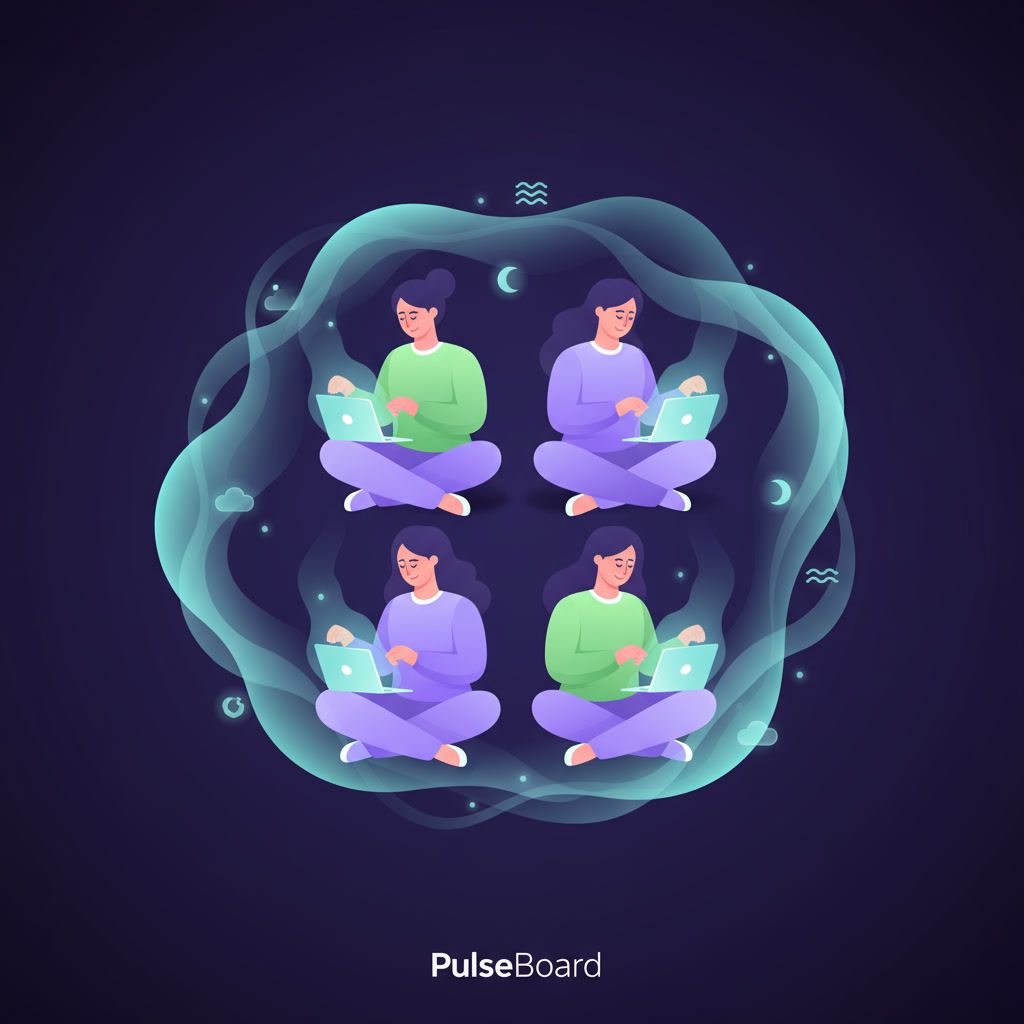
Introduction: Always On, Always Drained
In today’s workplace, “connected” has become the default setting.
We check messages before breakfast, scroll through notifications between meetings, and end our days answering one last Slack ping “just to stay on top of things.”
But staying always on comes at a cost — one that silently erodes focus, creativity, and wellbeing.
Modern teams aren’t burning out because they work too hard. They’re burning out because they never stop working.
Even when they log off, their minds are still wired for alerts, replies, and updates.
That’s why leading organizations are now rethinking productivity around a new idea: the digital detox — not as an escape, but as a strategy.
A digital detox isn’t about deleting apps or disappearing for a week.
It’s about designing boundaries that let teams recharge without losing momentum.
The Cost of Constant Connectivity
Digital tools have made remote collaboration possible. But they’ve also created what researchers call “cognitive residue” — the leftover mental clutter after switching between digital tasks.
According to Microsoft’s Work Trend Index, the average Teams user sends or receives 153% more messages per day than before the pandemic.
That’s not just communication — it’s exhaustion in disguise.
Constant connectivity leads to:
- Decision fatigue – Too many inputs, too little clarity.
- Emotional depletion – The brain never exits “work mode.”
- Sleep disruption – Late-night notifications trigger stress responses.
- Lower creativity – The mind can’t wander when it’s always reacting.
The irony? The very tools designed to increase productivity are now quietly diminishing it.
If Focus Is the New Hustle showed why attention is the new superpower, digital detox is how we protect that attention from digital overload.
Why Digital Detox Feels Radical (But Isn’t)
Most employees aren’t addicted to technology — they’re addicted to expectation.
The expectation to be reachable. Responsive. Reliable.
When leaders answer emails at midnight, teams learn that silence isn’t an option.
When messages go unanswered for 20 minutes, people assume something’s wrong.
In reality, availability is not the same as productivity.
Teams that build asynchronous rhythms — like those explored in Energy Management 101 — perform better because they manage effort, not hours.
Digital detox is about restoring balance — creating systems that allow both connection and disconnection to coexist.
Designing a Team-Wide Digital Detox
A digital detox doesn’t mean rejecting technology.
It means redefining the relationship between people and their tools.
Here’s how to design a healthy digital rhythm for your team.
1. Clarify Communication Boundaries
Not every message deserves an instant reply.
Set clear expectations for response times — for example:
- Slack messages: within 24 hours
- Emails: within 48 hours
- Urgent issues: defined escalation channels
This small change alone can reduce anxiety and restore calm.
Asynchronous culture isn’t slower — it’s smarter.
It allows focus work to happen in long, uninterrupted stretches — something covered deeply in Focus Is the New Hustle.
2. Schedule Detox Hours (Collectively)
Instead of encouraging people to “take breaks when you can,”
build shared detox hours into the workweek.
Examples:
- Focus Fridays: No internal meetings after noon.
- Offline Mornings: Delay Slack availability until 10 a.m.
- Digital Sundowns: Encourage everyone to close work apps by 6 p.m.
When boundaries are collective, no one feels guilty enforcing them.
3. Audit Notifications
Notification fatigue is the new noise pollution.
Audit every tool your team uses — Slack, Notion, Teams, Asana — and ask:
- Does this notification help me act?
- Or does it just remind me to check something?
Remove non-actionable alerts. Use summaries instead of pings.
Technology should support focus, not steal it.
4. Build Recovery Into the Workflow
Just like physical recovery after exercise, the brain needs downtime to consolidate learning and creativity.
This is the essence of The Science of Recovery — the next piece in this wellbeing series.
Try small structural changes:
- Shorter meetings (25 or 50 minutes instead of 30/60)
- “Silent sprints” where everyone works offline for a few hours
- End-of-week reflections instead of last-minute deliverables
Recovery shouldn’t be an afterthought. It’s part of performance.
5. Lead by Example
Leaders set the tone for digital boundaries.
If you send messages at 10 p.m., your team assumes they should too.
Instead, model balance — schedule messages for business hours, block time for deep work, and visibly take breaks.
Leadership isn’t about being always available. It’s about protecting space for others to think.
As Flow Over Force explains, great leaders design environments where energy moves naturally — not constantly.
Making Digital Detox a Cultural Habit
A detox isn’t a one-time event — it’s a practice.
Over time, the benefits compound: higher focus, clearer communication, and more meaningful rest.
To make it sustainable, combine three layers:
- Individual autonomy – Give people control over their availability.
- Team rituals – Create shared moments of silence, focus, or gratitude.
- Organizational reinforcement – Bake recovery into KPIs, meetings, and onboarding.
The message becomes clear:
We don’t measure hours online. We measure the energy behind them.
How PulseBoard Helps
PulseBoard was built for this shift.
Our 20-second check-ins let teams track emotional and mental energy without long surveys.
Managers can see when stress accumulates or when digital overload is rising — before it leads to disengagement or burnout.
By spotting early fatigue signals, leaders can respond with empathy, not urgency.
With PulseBoard, your digital detox isn’t a policy — it’s a data-driven wellbeing practice.
In Summary
A digital detox doesn’t mean disconnecting from work.
It means reconnecting with yourself, your energy, and your team’s rhythm.
The best teams don’t escape technology — they master how to use it intentionally.
They understand that silence isn’t absence. It’s recovery in progress.
When digital noise fades, focus, creativity, and calm return.
That’s not lost productivity — it’s sustainable performance.
PulseBoard helps you understand your team’s energy before burnout hits.
Quick, async check-ins give leaders a clear view of digital fatigue, team mood, and engagement trends — without disrupting focus.
Start a free pilot today and help your team unplug — without falling behind.
👉 Get started at PulseBoard.nl