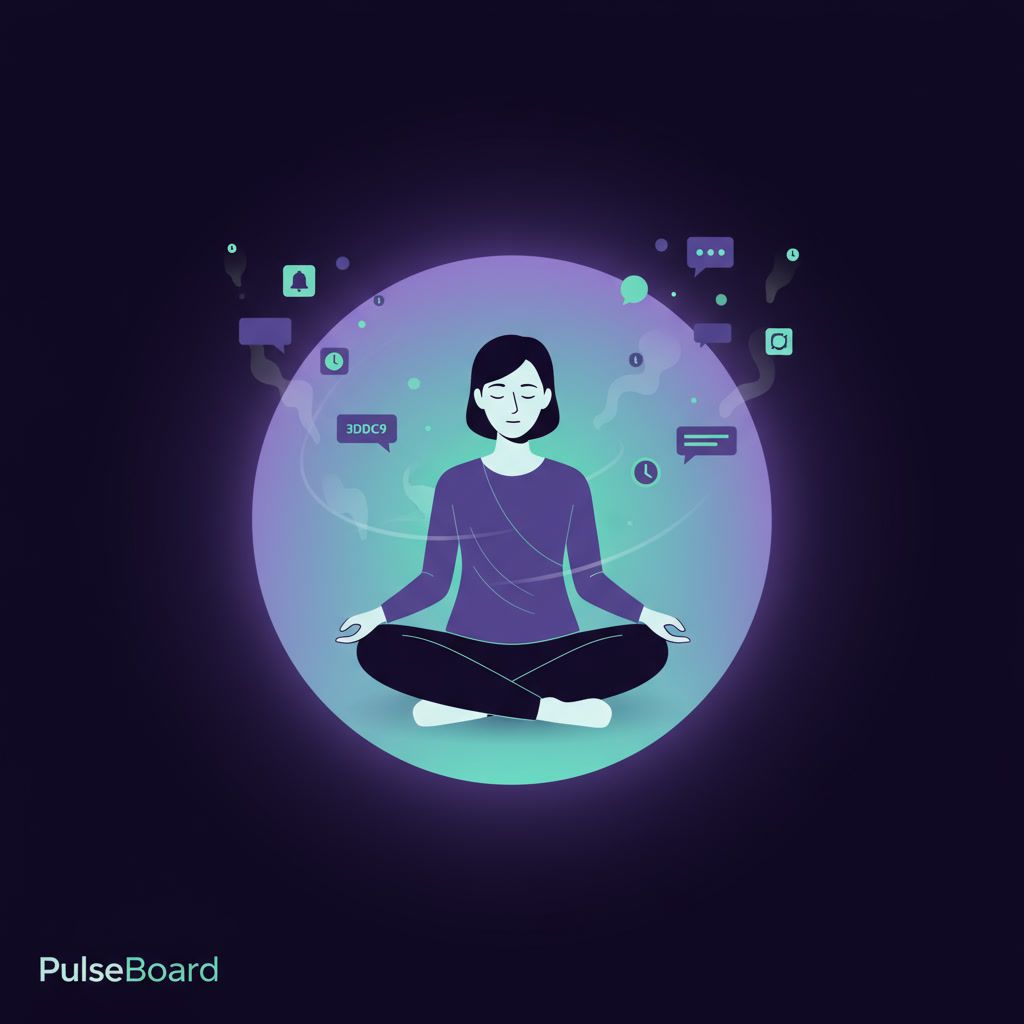
💡 Introduction: The End of the Hustle Era
We used to celebrate hustle — the 70-hour weeks, the late-night Slack replies, the idea that productivity meant being “always on.”
But in today’s hybrid world of constant notifications and digital noise, hustle has stopped working.
What separates great teams from burnt-out ones isn’t effort — it’s focus.
Focus is the new hustle. It’s not about doing more; it’s about creating the conditions to think clearly, act intentionally, and build meaningful progress instead of busywork.
In this article, we’ll explore:
- Why focus is becoming a competitive advantage
- What deep work looks like in remote teams
- How leaders can design focus-friendly environments
- Practical rituals to reclaim attention and flow
🧠 Why Focus Has Become Scarce
Modern work is fragmented.
According to research from the University of California Irvine, the average worker is interrupted every 3 minutes, and it takes 23 minutes to refocus afterward.
Multiply that across a day, and half our working hours vanish into distraction recovery.
The digital workplace promised freedom — yet it delivered noise.
Slack, Teams, and email keep us connected but also trained us to prioritize instant response over intentional work.
The result:
- Shallow productivity — people are busy but not effective
- Cognitive exhaustion — the brain never fully rests
- Invisible burnout — emotional fatigue disguised as “being productive”
Focus has become rare. And like all scarce things, it’s now valuable.
⚡ The Business Case for Deep Work
Deep work, as defined by Cal Newport, is “the ability to focus without distraction on a cognitively demanding task.”
It’s how we create value, innovate, and solve complex problems.
Teams that protect deep work:
- Deliver higher-quality output
- Solve root problems faster
- Build intellectual property and product innovation
- Experience lower turnover and higher engagement
In short — focus compounds.
Every minute of uninterrupted attention increases clarity and reduces rework later.
For leaders, protecting focus isn’t a perk; it’s a performance multiplier.
🧩 The Focus Paradox
The paradox of remote work is this: the tools that empower autonomy are the same ones that erode attention.
Too Many Channels
We juggle email, Slack, Notion, Jira, and Figma — each demanding a slice of attention.
Too Little Silence
Modern communication rewards immediacy. The faster you reply, the more “available” you appear.
Too Much Visibility
Presence often replaces progress. We signal we’re online instead of truly moving the needle.
The solution isn’t fewer tools — it’s better boundaries.
🧭 Designing a Focus-First Culture
A focus-first team doesn’t happen by accident.
It’s designed, modeled, and protected — especially by leadership.
1️⃣ Define What “Focus” Means for Your Team
Focus looks different for each role. For developers, it’s uninterrupted coding; for marketers, creative ideation.
Define deep work by role — then protect it like any other meeting.
2️⃣ Normalize “Do Not Disturb”
Teams need permission to silence notifications.
Leaders can set the tone by blocking focus hours on shared calendars.
What’s visible becomes acceptable.
3️⃣ Reduce Synchronous Load
Meetings are focus killers. Audit recurring calls and replace status updates with async check-ins.
PulseBoard’s quick 20-second check-ins help teams share sentiment and workload balance asynchronously — no extra meetings needed.
4️⃣ Measure Outcomes, Not Hours
When performance is measured by visibility, focus suffers.
Shift from activity (“how much time did you spend?”) to impact (“what did you achieve?”).
🔄 Rituals That Rebuild Focus
🕰️ The Two-Hour Rule
Everyone gets at least two 2-hour focus blocks weekly — no meetings, no messages.
💬 Async Mondays (or Focus Fridays)
Dedicate one day to async work only. It builds rhythm and autonomy.
🔕 Weekly Attention Reset
At week’s end, reflect:
- What broke focus?
- What fueled flow?
Adjust accordingly.
🌿 Energy-Aligned Scheduling
Match tasks to energy peaks.
High-energy mornings = deep work.
Afternoons = collaboration.
💬 Leadership as a Focus Shield
Leaders shape attention culture. They can either amplify noise or filter it.
Great leaders shield their team from unnecessary urgency.
They set clear priorities, communicate asynchronously, and trust their people to deliver without micromanagement.
“Focus is leadership in action.
It’s not telling people to work harder — it’s removing what makes that impossible.”
When leaders respect attention, teams follow suit.
🌱 The Emotional Side of Focus
Focus isn’t just cognitive — it’s emotional.
We can’t concentrate when we feel anxious or over-observed.
Creating psychological safety matters as much as time blocks.
When people trust they can go heads-down without being judged as “unavailable,” they unlock genuine flow.
PulseBoard helps visualize this — early dips in mood, skipped check-ins, or rising stress are early focus friction signals.
🔍 Measuring Focus Without Surveillance
How do you measure focus without tracking screens?
Look for:
- Quality over quantity in deliverables
- Predictable progress
- Reduced chat velocity, but higher project completion
- Consistent mood stability
Focus metrics are subtle — they live in team rhythm, not individual activity.
❤️ In Summary
The future belongs to teams that master attention.
Not by pushing harder, but by working smarter — calmer.
Focus is the new hustle: it’s sustainable, intentional, and deeply human.
At PulseBoard, we believe attention is emotional.
That’s why our 20-second check-ins measure not just engagement, but energy.
When teams can see how focus feels, they can act before burnout begins.
👉 Start your free trial at PulseBoard.nl