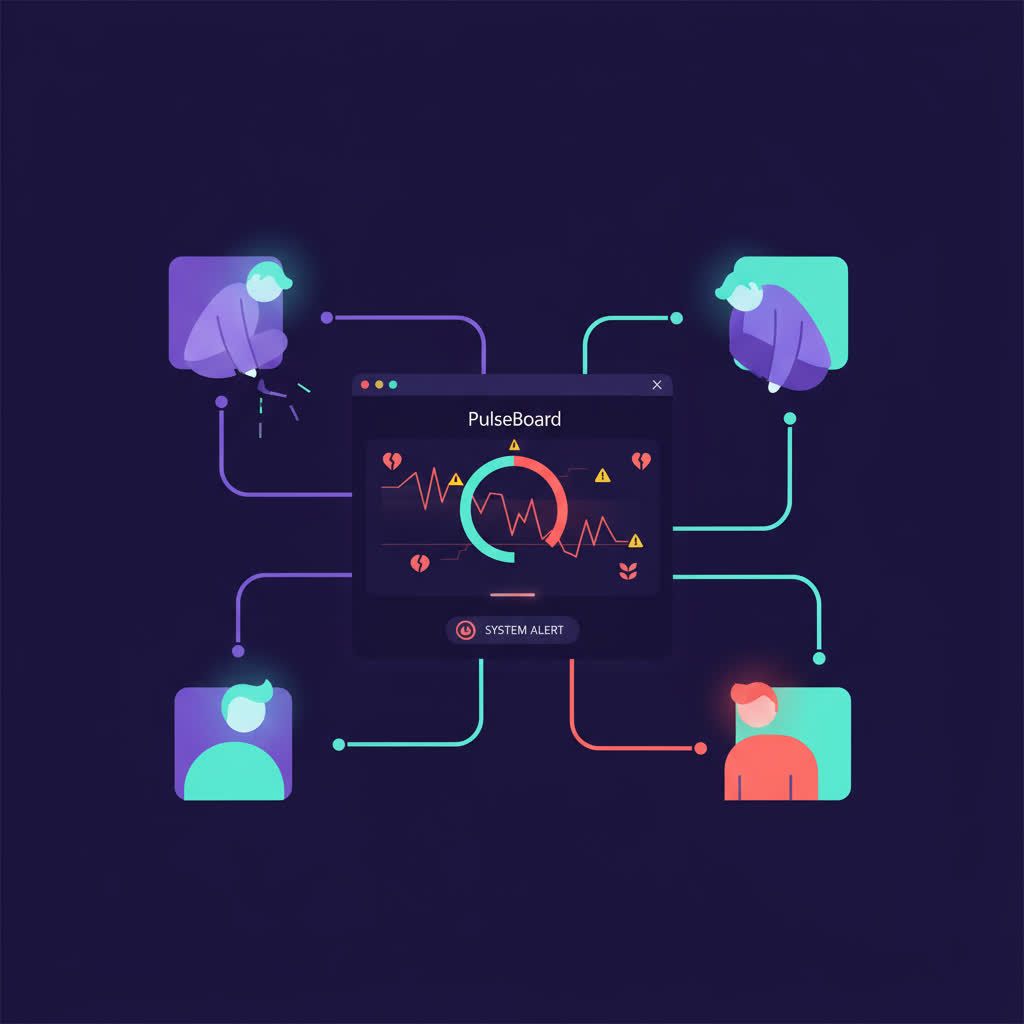
Burnout isn’t always about workload. In remote teams, it often stems from what people feel — or don’t feel — day to day.
Asynchronous work has unlocked incredible flexibility. But for many teams, it’s also introduced isolation, misalignment, and hidden stress.
Burnout creeps in quietly — and spreads if you’re not watching.
In this post, we’ll break down:
- The 7 most common burnout causes in remote teams
- Practical solutions to address each one
- How PulseBoard helps you detect the warning signs early
🔥 1. Emotional Isolation
When you don’t see your team, it’s easy to miss how they’re actually doing.
Symptoms:
- Team members feel alone with their workload
- No casual space to talk about struggles or emotions
- Lack of social bonding = lower emotional resilience
Fix it with:
- Weekly async check-ins with mood tracking
- “How’s your week?” threads in Slack
- Private manager 1-on-1s based on PulseBoard insights
🧱 2. Unclear Expectations
In async setups, ambiguity leads to anxiety.
Symptoms:
- Overthinking decisions
- Uncertainty about priorities or responsibilities
- People working extra to “make up” for not being visible
Fix it with:
- Clear documentation of roles & goals
- Public task updates + async daily standups
- Manager support for “done is better than perfect” mindset
💬 3. Feedback Blackout
No feedback = no fuel.
Symptoms:
- No comments on work shared
- Team doesn’t know if they’re doing well
- Emotional drain from constant uncertainty
Fix it with:
- Peer feedback rituals (e.g., #weekly-wins channel)
- Monthly “Pulse Roundups” with AI summaries of team sentiment
- Tools like PulseBoard to surface quiet excellence and stress trends
💻 4. Always-On Pressure
When your home is your office, it’s hard to disconnect.
Symptoms:
- People working odd hours, skipping breaks
- Feeling guilty for logging off
- No boundaries between life and work
Fix it with:
- Encourage async norms (no instant replies)
- Visible offline hours / auto-responders
- Normalize “no Slack after 6pm” culture
🙅♂️ 5. Lack of Recognition
Remote teams often forget to celebrate.
Symptoms:
- No shout-outs for small wins
- Team members feel invisible or replaceable
- Motivation drops despite solid work
Fix it with:
- Async shout-outs in public channels
- Lightweight weekly “highlight reels” (automated with PulseBoard)
- Manager habits around private praise
🤐 6. Fear of Speaking Up
Psychological safety isn’t visible — but you’ll feel its absence.
Symptoms:
- People don’t share concerns
- No questions in meetings
- Feedback loops are one-way
Fix it with:
- Anonymous feedback via pulse check comments
- Optional “mood + why” check-ins
- Open discussions about workload or well-being
📉 7. No Way to Say ‘I’m Not Okay’
Most tools only track what’s done. Not how people feel doing it.
Symptoms:
- Sudden drop in morale
- Employees “go quiet” before quitting
- No early signal for managers
Fix it with:
- PulseBoard’s mood tracking and trend analysis
- Real-time burnout risk alerts
- AI-powered summaries for manager action
🧭 Don’t Let Burnout Catch You Off Guard
You won’t see burnout in Jira or Slack.
You’ll see it in what’s not said, the camera that stays off, the reply that never comes.
That’s why we built PulseBoard.
A better way to stay emotionally in sync — without more meetings.
✅ Start Catching the Causes, Not the Consequences
Try PulseBoard for free and prevent silent burnout in your remote team.