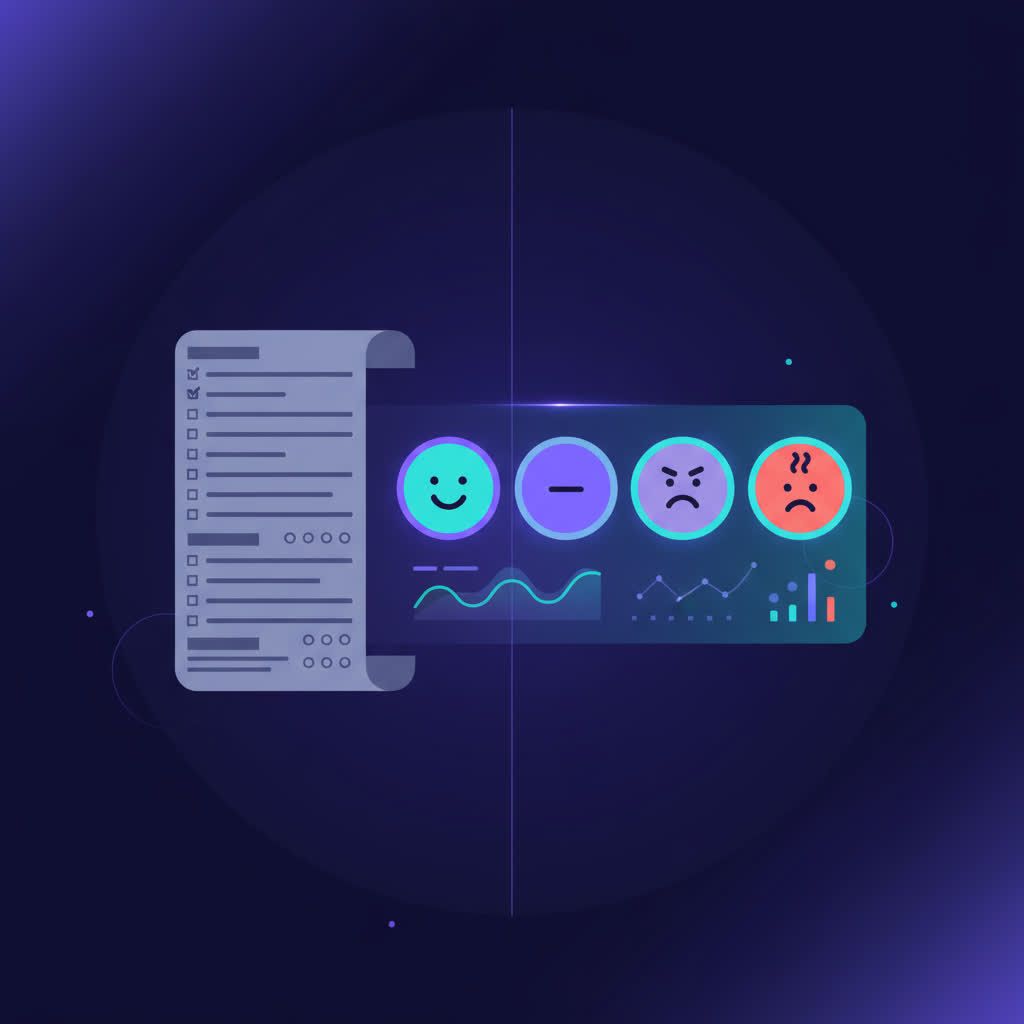
Your team doesn’t hate feedback — they just hate surveys.
If you're sending quarterly employee engagement surveys and wondering why response rates are low, comments are generic, and insights come too late… you're not alone.
Traditional surveys are broken.
They’re long, impersonal, and completely disconnected from the real-time state of your team.
That’s why more companies are switching to pulse checks — lightweight, async check-ins that actually work.
In this post, you’ll learn:
- Why engagement surveys don’t work (especially remotely)
- What pulse checks are and why they outperform surveys
- How to implement a low-friction, high-impact sentiment system
- Why PulseBoard was built for this shift
📉 The Problem with Traditional Engagement Surveys
Most companies run quarterly or annual surveys using tools like Officevibe, Culture Amp, or Google Forms.
But the problems are clear:
Problem
Why it happens
💤 Survey fatigue
20–60 questions is exhausting, especially when nothing changes
🕒 Delayed insights
Feedback comes in weeks after emotions peak
🙈 Low trust
Employees don’t believe anything will happen with their input
🧊 Inauthenticity
Questions feel corporate, detached, or too generic
Result? You get surface-level data from the loudest voices — not what your team really feels.
✅ What Is a Pulse Check?
A pulse check is a short, frequent, async check-in that gives insight into team mood, engagement, and potential burnout.
Typically includes:
- Emoji or sentiment slider (e.g. 😃😐😫)
- Optional open comment
- Frequency: weekly or bi-weekly or even daily
- Delivery: Slack, email, or app
It takes less than 10 seconds to complete.
No pressure. No overthinking. And no login pages.
🔄 Pulse Checks vs Traditional Surveys
Feature
Traditional Surveys
Pulse Checks
Frequency
Quarterly / Yearly
Weekly / Bi-weekly/ daily
Completion time
15–25 mins
10 seconds
Participation
30–60%
70–95%
Psychological safety
Medium
High (low-stakes)
Usefulness for managers
Delayed, hard to parse
Actionable, real-time
AI-driven insights
Rare
Built-in with tools like PulseBoard
🧠 Why Pulse Checks Work So Well
- They reduce pressure
- They create a habit
- They give early signals
- They normalize emotion in teams
- They build trust without the overhead
When done consistently, pulse checks create an emotional signal layer — without adding meetings or surveys to the calendar.
⚡ How PulseBoard Reinvents Pulse Checks
PulseBoard was built with async-first teams in mind. Here’s what it adds to pulse checks:
1. Slack-native check-ins
No new tools. Your team responds directly in Slack or browser.
2. Weekly AI summaries
Managers don’t need to read every comment. GPT-powered digest highlights trends, concerns, and wins.
3. Burnout risk alerts
Patterns like multiple “stressed” check-ins or sudden silence trigger flags.
4. Zero survey fatigue
No 30-question forms. Just one tap, one moment, once a week.
🔄 Real-World Example
“We used to run quarterly surveys. People skipped them. Now, we get 90% check-in participation every Monday. I can tell who’s feeling stressed before it becomes a problem.”
– Head of People @ Remote SaaS Company (PulseBoard beta)
✋ Don’t Wait for the Survey to Tell You It’s Too Late
If your team is burned out, disconnected, or frustrated, the last thing they want is a 60-question survey.
What they will do is click a single emoji if they know it matters.
That’s the power of pulse.
💬 Ready to See What Your Team Really Feels?
PulseBoard helps remote teams track sentiment, detect burnout, and build healthy culture — one pulse at a time.
👉Start Free