For years, HR has been associated with:
- contracts
- policies
- risk management
- absence registration
Necessary tasks—but they rarely inspire people.
Amplitie introduces a different paradigm:
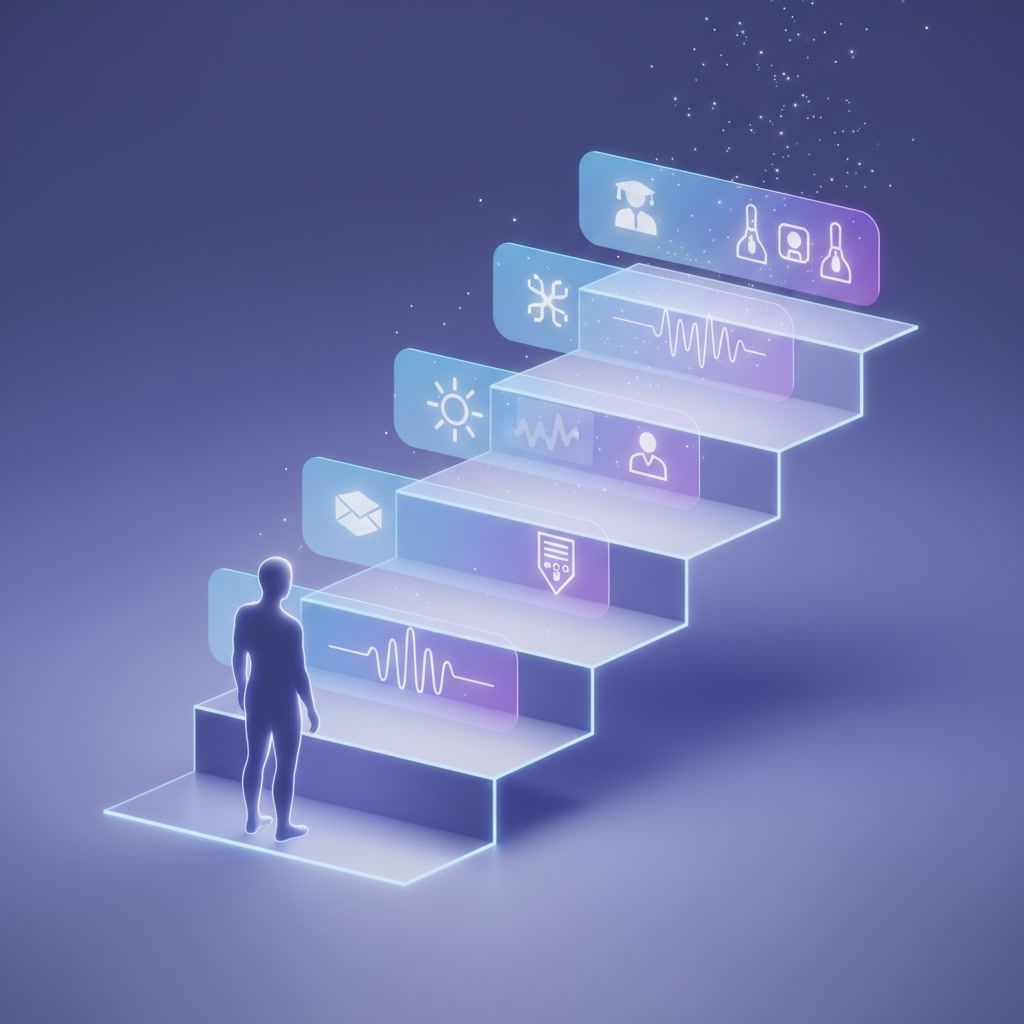
from Human Resources to Human Growth.
Instead of only asking “How do we reduce absence?”, People teams can ask:
“How do we design work so that people can grow, stay healthy, and perform sustainably?”
The Limits of a Risk-Only Approach
If HR is only measured on:
- absenteeism
- legal risk
- policy compliance
…then wellbeing becomes primarily about avoiding problems.
That creates:
- minimal compliance instead of genuine engagement
- defensive communication
- low trust around wellbeing topics
Amplitie doesn’t replace risk management—but it adds a growth layer on top.
What Amplitie Means for People Teams
- From “fixing problems” to “designing conditions”
Less: “We step in when something is broken.”
More: “We help build healthy work by design.” - From one-off programs to ongoing rituals
Less: annual wellbeing week.
More: small recurring practices: check-ins, recognition, recovery, clarity. - From anonymous surveys to continuous lived experience
Less: big survey, once a year.
More: light pulses that show what work actually feels like—every week. - From HR-only to shared responsibility
Leaders and teams become co-owners of wellbeing, with People teams as facilitators.
Amplitie Tools for People Teams
People teams can bring amplitie to life by:
- introducing simple emotional check-ins (e.g. via PulseBoard)
- training leaders to talk about energy and capacity
- offering playbooks instead of just policies
- giving teams space to experiment with rituals that fit their context
The People team becomes:
- a designer of healthy systems
- a guide in difficult conversations
- a translator between business goals and human needs
Linking Amplitie to Hard Metrics
To be taken seriously at exec level, amplitie must connect to:
- retention
- performance
- innovation
- customer satisfaction
People teams can use tools and data to show:
- how stable energy relates to fewer exits
- how psychological safety correlates with idea-sharing
- how burnout risks spike under certain conditions (e.g. unclear priorities)
Amplitie is “soft” in topic, but hard in its impact.
First Steps for People Teams
- Map existing practices that already support amplitie (recognition, autonomy, learning).
- Start measuring team energy in a light, safe way.
- Choose one pilot team to experiment with amplitie rituals.
- Document and share success stories internally.
Over time, amplitie turns People teams into strategic partners in human growth, not just administrators or risk managers.